

Endovenous Laser Ablation (EVLA)
Endovenous Laser Ablation (EVLA) — also known as Endovenous Laser Treatment (EVLT) — is a minimally invasive, in-office procedure used to treat symptomatic varicose veins caused by chronic venous insufficiency (CVI). It is most commonly performed to close incompetent saphenous veins, which are a frequent source of venous reflux.
EVLA has been in clinical use for more than two decades and is a well-established, effective treatment for incompetent saphenous veins. Modern 1470 nm laser systems demonstrate high long-term vein-closure rates with a low incidence of serious complications. At IVSI, EVLA is the preferred method of thermal vein ablation.
How Endovenous Laser Ablation (EVLA) Works
EVLA treats varicose vein disease by closing the malfunctioning vein from the inside. The procedure is performed under ultrasound guidance to ensure accurate placement and treatment of the targeted vein.
A thin laser fiber is inserted into the diseased vein through a small skin puncture. Local anesthetic is then injected along the length of the vein within the saphenous compartment, providing anesthesia and protecting surrounding tissues.
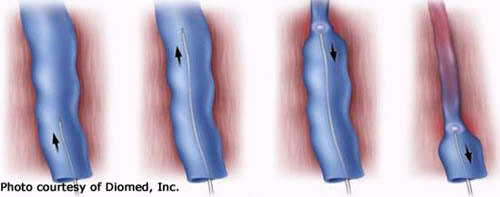
Illustration for educational purposes. Not an actual patient
Controlled laser energy is delivered inside the vein, causing the vein wall to collapse and seal closed. The treated vein is closed and removed from circulation, and blood is redirected through functioning venous pathways.
Because the treated superficial vein has incompetent valves and allows abnormal backward blood flow, closing it eliminates that refluxing pathway from circulation. Over time, the closed vein is gradually absorbed by the body as part of the natural healing process.
Recovery After EVLA
Recovery after EVLA is generally rapid. Walking is encouraged immediately after treatment, and most patients are able to continue routine daily activities the same day.
Pain and Discomfort
Discomfort after EVLA is usually mild to moderate and can generally be managed with over-the-counter pain medication.
Tenderness may be more noticeable when a larger vein is treated or when the treated vein is located close to the surface of the skin.
Compression Stockings
Compression stockings are an important part of early recovery and, for many patients, the most inconvenient part of varicose vein treatment.
Stockings are generally worn continuously for the first 24–72 hours, followed by daytime use as directed. Some patients benefit from wearing compression longer, particularly while the treated leg remains achy, tender, or more comfortable with support.
Detailed compression instructions are provided after the procedure.
Activity After Treatment
Walking and regular movement are encouraged. If the leg aches or throbs, walking or simple foot and ankle movements can help stimulate circulation.
During the first two weeks:
- Walk several times each day
- Avoid vigorous exercise and heavy lifting
- Avoid prolonged standing or sitting without movement
- Avoid prolonged air travel when possible
- During necessary long-distance car travel, stop approximately every 2 hours to walk and move the legs
- If flying cannot be avoided, wear compression stockings and keep the legs moving during travel
- Avoid hot baths, hot tubs, and saunas during the early healing period
Patients with physically demanding occupations may require temporary modification of activity.
What to Expect During Healing
The treated vein undergoes closure followed by healing and gradual reabsorption. During this process, temporary symptoms and changes may develop along the course of the treated vein.
Common and expected findings include:
- Tenderness and mild-to-moderate discomfort for several days, depending on the size and location of the treated vein
- A tightening or pulling sensation along the treated vein, often developing several days after treatment
- Localized inflammation and increased tenderness, particularly when the treated vein is close to the skin surface
- Bruising in the treated area
- Dull aching, firmness, or palpable areas along the treated vein, which may remain noticeable for several weeks or longer while the vein heals and is gradually reabsorbed
These symptoms improve on their own as healing progresses.
Temporary Numbness
Temporary numbness or altered sensation can occur when inflammation develops around a treated vein located close to a sensory nerve. The sensation may persist beyond the initial recovery period while the surrounding inflammation resolves.
Follow-Up Duplex Ultrasound After EVLA
Follow-up after EVLA is individualized according to the vein treated, vein diameter, patient risk factors, timing of subsequent procedures, and overall treatment plan.
When treatment procedures are scheduled close together, Dr. Tryzno evaluates the recently treated vein with Duplex ultrasound as part of the subsequent treatment visit.
Patients with an increased risk of deep vein thrombosis (DVT), treatment of larger-diameter veins, or other clinical considerations may be scheduled for a separate follow-up Duplex ultrasound within the first several days after EVLA. A separate ultrasound examination may also be appropriate when subsequent treatment procedures are separated by a longer interval.
Because varicose vein treatment is often performed in stages, Duplex ultrasound reassessment is also performed after completion of the initial planned stage of treatment. This allows the treated and remaining venous circulation to be reassessed and helps determine whether residual tributary varicosities, incompetent perforating veins, or other remaining sources of reflux require additional treatment.
Schedule a Vein Evaluation
If you are experiencing leg pain, swelling, heaviness, skin changes, or varicose veins, a vein evaluation can help determine whether venous reflux is contributing to your symptoms and whether EVLA or another treatment approach is appropriate.
📞 Call (847) 518-9999 to schedule a vein evaluation with Dr. Tryzno.
Medical Disclaimer
This information is provided for educational purposes only and does not
replace a personalized medical evaluation. Treatment recommendations and
outcomes depend on individual clinical findings and venous anatomy.
Learn More